

Showing posts with label Escape and Evasion. Show all posts
Showing posts with label Escape and Evasion. Show all posts
SERE TIP #33
Nickel Knife


check this product out by clicking HERE
Kevlar Trip Line

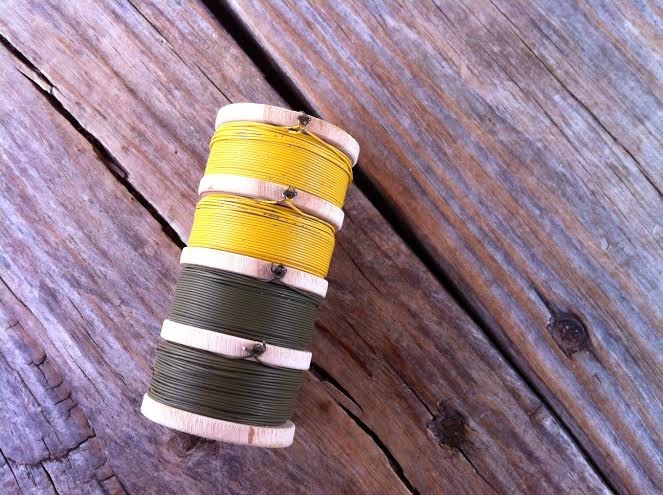

Check it at http://www.shomer-tec.com/product/kevlar-trip-line-1619.cfm
Perfect Gray Man Pack: Tom Bihn Synapse 25


How to Become the Gray Man

The main objective is to not create stimulus to those around you. Creating stimulus is having anything on you or your movement that may stand out or cause someone to remember you. You will notice next time you go into a store or restaurant there are people that you don't notice at all. They are non-threatening and completely average in every way. This is the Gray Man.
How do we do this?
- Refrain from wearing any sort of logos- be it NRA, the company you work for, athletic teams, and so on. Go "sanitized" (sanitized is a SF term in which they strip any identifying materials from their clothing or gear. Even down to the labels if operating in a country we aren't supposed to be in). For example if your wearing a Miami Dolphins hat; someone may also be a fan and notice you (creating stimulus) and could even strike up a conversation. Which is worst-case fail scenario
- Clothing needs to be of a classic conservative look. Jeans and Khakis are acceptable. Stay away from any 5.11's or cargo pocket style pants. Wearing basic polos, t-shirts, and button-downs in neutral colors (grays, navy blues, earth tones). Nothing that's bright or exotic looking. Basically you want a classic look- the one that never goes out of style. Don't wear anything that is of the latest fashion that may be loud or people are interested in. Stay away from all tactical gear. Especially tactical footwear.
- Dress for the occasion. If your going to a formal dinner- dress formal. Informal dress casual.
- Dress for the season you are in. Do not wear a jacket in summer time.
- Do not make eye contact and walk in the pace of the baseline.
- Stay away from fashionable hair styles. A mo-hawk will not work even if your wearing the best Gray Man outfit.
- For ladies- Avoid revealing clothing that may draw the attention of men.
- Also remember to look non-threatening.
For some being the Gray Man is impossible. If your 7 feet tall you are going to create stimulus. If your overweight or if you have a overly muscled physique you will most likely be remembered. If you have any unchangeable features i.e. scars, birthmarks, etc... It may also be difficult.
We will re-examine the Gray Man concept in the future- detailing situations, clothing selection, and tools. Check out our video where we go in-depth on the above concepts.
We will re-examine the Gray Man concept in the future- detailing situations, clothing selection, and tools. Check out our video where we go in-depth on the above concepts.
Black Scout Tutorials - Urban Movement
In this episode, we describe techniques used in the Urban movement concept. We illustrate different ways to stay in the baseline and some things you shouldn't do when blending into your environment. Hope you take something form this and thanks for watching!
How to become the "Gray Man"- Urban Survival- Black Scout Tutorials
In this episode we discuss the Gray Man Concept and its applications. We will also go over do's and don'ts to become successful at becoming the Gray Man. The Gray Man is essentially becoming invisible in your environment and to move undetected in an urban area. Please subscribe and share!
Black Scout Quick Tips - Hide It!
In this episode, we give some sneaky tips on where to hide some of your gear so it is both hidden and easily accessible. Hope you enjoy this quick tip and thanks for watching!
Surreptitious Entry/Escape and Evasion Kit

I designed this kit to act somewhat as a personal survival kit (PSK) for lockpicking/escape and evasion gear. The reasoning is that this is a self contained grab-and-go kit; just like a PSK. When I'm out of the country I layer this type of gear on my person. Concealing it in places that I feel would go undetected in a search. Stateside in my day to day life I don't usually perceive a threat of capture. I do carry minimal gear but usually nothing this expansive. As I said being a grab and go kit. In a rush I can grab this kit and start layering the elements on my person when a threat is imminent.
Being that this is a Surreptitious Entry kit it doesn't include tools such as: Lockpick Guns, Bolt Cutters, Pry bars, Screwdrivers, etc...

Cache Contents

Lets get back to today's topic--Cache contents. People can get really bent out of shape and go overboard on cache items. I've heard of guys caching vehicles on the extreme side, we will be a bit more toned down than that.
A lot of your cache contents will be dependent upon the application of the cache. Such as, a cache for your bug out route may contain items like food, water, and fuel. Whereas in your onsite cache you may have 2000 rounds of ammo for a shelter-in-place scenario or to keep looters from stealing it. Whatever the reason you need to think about how it will help you in that situation. If it helps you in a certain situation then it most likely will be a worthwhile investment.
Ask yourself these questions to help determine contents for various applications:
- Is this a resupply point?
- If so, what items will I have consumed by the time that I reach the cache? (ammo?)
- What items will help me to keep moving if I reach the cache? (food, medical gear, caffeine, water, or fuel?)
- How large is the cache container?
- How can this cache supplement my BOB or Get Home Bag loadout?
- Can I survive with what is solely in the cache?
- Will I need to reach this cache by vehicle or can I reach it by foot?
- Can I carry the contents of the cache on foot or will I need a vehicle?
These are just a few questions that you need to ask yourself when determining what type of contents to place in your cache.
Below I will list out different types of caches and recommended item list.
- Resupply cache (to resupply during travel)- food, water, ammunition, and fuel
- Onsite cache- identification's, passports, encrypted thumb drives, currency, firearms, ammo, bug out supplies, and whatever else you deem necessary
- Urban Evasion Cache- lockpicks, tools, weapons, burn phones, pre-paid credit cards, cash, and disguises
- Survival Cache- essentially this is a survival kit with items that will help you survive (I will detail mine below)
Here's whats in my survival cache.

Survival basics such as a knife, fire kit, compass, cordage, and something to carry it all in (bag). You want to make sure you choose quality items. They need to be reliable. Usually when I upgrade gear, I will place older items into caches. If your still working on getting your primary quality gear such as BOB's or Get Home Bags; I think its okay to then use less quality items for your caches. Something is better than nothing in a survival situation.

Illuminations devices are always key to making a survival situation a bit more comfortable. For my cache I chose an inexpensive headlamp. ($4.99 Energizer Trailfinder/Link Below), Mini-Maglite with red lens, and a few chem-lights. The Maglite brand is decent quality and can take a beating. I also included a red lens to protect my night vision as well as to help with going undetected during the night. Since red is harder to see from a distance than a traditional white beam.

Food and water is critical to us. It also gives us energy to keep moving by providing precious calories. In a cache; you will want to have food that will last a long time and can be eaten without needing to cook it. I like MRE's for that reason. They can be ripped open and eaten on the move. Notice I didn't include an MRE heater in this kit. That's because when on mission's we always ate our chow cold, we never wasted precious time by heating and eating. We ate them cold and on the move. I also added Emergency Drinking Water Rations. I could have added water purification tablets but I would then need to pack a container. The water rations are in their own container and can easily be carried and drank when needed

Shelter will vary depending on your location. Mine current environment doesn't get too cold any time of the year. That allows me to be a little more conservative with my sheltering options. For my kit I have two contractor grade trash bags. They can be used to make a hobo sleeping bag by placing one in the other and filling the outside bag with leaves and debris. They can also be used to make poncho, tarp, tent, or to gather water. I've also included a military space blanket that is an OD green color. This will help retain body heat as well as helping me remain undetected if I'm in evasion mode. The trash bags can also be used as a sort of camouflage if need be. I've also included a brightly colored rain poncho in the case I do need to be seen or rescued. The duct tape is mandatory (I've made it into a smaller roll to be easily pack-able).

I've also included a first aid kit (that included boo-boo items, painkillers, as well as trauma related supplies. I've also included currency, handcuff keys, lockpicks, and a bobby pin. These items will help if I've been restrained or with the possibility of becoming restrained.
This was just some gear from one of my caches in the future I'll go over other contents for a variety of other caches. Hopefully this may have helped you in deciding what gear to place in your cache.
Here are a few links to some low-cost/decent quality items for your cache:
Black Scout Survival - Surreptitious Entry/Escape and Evasion Kit
In this episode we break down what is in our escape and evasion kit that contains lock picking elements as well as urban survival elements. Check it out and hopefully ti help you gain ideas for creating one for yourself. Please subscribe and thanks for watching!
Caches Part 3 of 3 (What is in my cache?)
In this episode, we conclude this series with describing what is actually in our cache and hopefully you can take some of these tips when building yours. Please check blackscoutsurvival.com for some more tips and recommendations on this topic and thanks for watching!
Cache Locations

Cache locations will depend on what application you are using it for:
- From work to home
- home to bug out location
- an offsite location with general survival supplies
Why would you need a cache from work to home? If something catastrophic happens and going by vehicle is not an option- what do you do? Do you have enough gear on you or in your EDC bag to get to your house? How far is your house from your work? Can you make it on foot in your current physical condition?
If your within a few miles (walking distance); you may not need a cache. If your over 10 miles, I would highly recommend a cache en route to home. Especially if your having to evade during the commute back. A short hike could turn into days when trying to stay on the move while being undetected.
Getting to your BOL (bug out location) you may encounter hostiles, gas stations may be closed, or your bug out location may be a state or two away. Things like food, water, gas, and ammo may be needed to make it to your Bug Out location.
Another thing to consider will be if its an "onsite" or "offsite" cache. I believe you should have a few of both.
- Onsite-Your residence, safety deposit box, property you own other than your residence, or a storage unit. These are just a few examples. Basically something you own or is in your name to access freely.
- Offsite- Family or friends house, buried or hidden on someone else's property, along the road (home-work/home-BOL), inside a building. Basically something you do not own or have rights to.
Onsite and offsite caches will also be gear dependent and I will also go over that in a future article.
Caches can also be buried, overt, covert, and or camouflaged.
Buried
- The biggest con to this method is that digging is required for placing and retrieving. This means tools may be needed to recover the cache.
- The possibility of the cache being found by someone other than you is unlikely. To prevent metal detection- throw scrap metal around the area.
- You must remember the exact location. Do this by pace counting from a terrain feature like a tree. You can also carve initials with a heart as if some lovers had been there to help you identify the tree. For night time identification you can use glow-in-the-dark tack's as sold in most hunting stores.
Overt
- In plain sight without giving away its true nature. Such as a coffee can in the pantry that contains currency or jewelry. Or something like a pistol stored in a dog food bin.
Covert/Camouflaged (Above Ground)
- Covert or Camouflaged caches have the benefit of being easy to find/retrieve.
- The problem with them is that they are easier to find/retrieve for other individuals as well.
- These should be considered for more short term caches and not to be in place for an extended amount of time.
- Can be camouflaged with paint (similar to mine above) which will also protect if from the elements. A camouflaged ammo can could be hidden in a low hanging bush and will be very hard to detect in a dense wilderness environment.
Onsite caches can be buried on your property or under your house (if you have a crawl space). They can be hidden within your house in an overt/in-plain-sight manner. I will discuss this further in the next article about cache containers. Onsite caches are easy to recover and can be recovered at any time because your the owner of the location.
Offsite poses a few problems such as discreetly placing the cache so that no one sees and steals your cache. They can be compromised at anytime, leaving you without any supplies in an emergency. You must remember the exact location of the cache. There is also the possibility that the location changes- i.e. structure is built over your cache, storm destroys or makes it impossible to retrieve your cache, or your cache container fails and destroys your contents.
These are some things to consider when thinking about where to place your cache. Utilizing a mix of the above locations will give you an advantage over just burying a few caches along your Bug Out Route. Spread them around and you will be better prepared. We will continue this series discussing other ideas surrounding caches. Also check out our YouTube for a video series on this subject.
These are some things to consider when thinking about where to place your cache. Utilizing a mix of the above locations will give you an advantage over just burying a few caches along your Bug Out Route. Spread them around and you will be better prepared. We will continue this series discussing other ideas surrounding caches. Also check out our YouTube for a video series on this subject.
Titanium Stick Pen

Here's a new offering from Shomer-Tec that crosses between EDC tool, Self-Defense weapon, and Escape and Evasion tool. This is the Titanium Stick Pen and is built from (you guessed it) titanium. To be exact it is constructed from Grade 9 Seamless Titanium tubing. Making it an extremely durable tool.
Unlike many tactical pens on the market, it looks like a regular stick pen. So it will go unnoticed in public. You can choose between a standard matte finish and a rainbow high polish.
Aiding in the Escape and Evasion portion is the Pen Cap Handcuff Key. Essentially it is a handcuff key built into the clip portion of the pen cap. It's very effective and easily concealable and a great addition to make this a multi-functional piece of gear.
The Titanium Stick Pen comes in at $37 and can be purchased from Shomer-Tec. Replacement ink cartridges can also be purchased and cost a very affordable $1 each.

Black Scout Tutorials - Caches (Containers and Locations) (Part 2 of 3)
In this episode, we continue with caches and make recommendations on what types of containers to use as well as expand on location recommendations. This is part 2 of a 3 part series and hope you tune in to see the final episode! Thanks for watching!
Black Scout Tutorials-Introduction to Caches
In this episode, we discuss caches and why we use them. This is the first of three videos to help everyone understand why they might need a cache, where to put it, and what you need to put in them. Hope this helps and stay tuned for the next videos. Thanks for watching!
Introduction to Cache's

Cache's can be buried, above the ground, hidden within structures or in plain sight. Much of that depends on your location and applications.
Because most of us are not clandestine operatives our cache's fall into two categories.
- Grid down situation/Bug Out application
- You need to get Off Grid/Escape and Evasion/Manhunt
A Grid Down situation or Bugging out is fairly self explanatory. Things have gotten out of control on a local/national/global scale and your survival depends on you leaving the area. This could mean caches along your bug out route to help resupply you. Whether that resupply is food, water, guns/ammo, clothing. It could also be supplies to get you from your work to home in the case you have to escape on foot or another mode of transportation other than your vehicle.
Imagine you are in a foreign country on vacation, business, military personal, or civilian contractor serving abroad and you've been targeted. You need to get off grid because you've been targeted or escaping and evading capture. This type of cache would contain a few different items than than a grid down type. Think more along the lines of cash, disguises, wilderness survival gear, lockpicks, and comm gear. You may ask why wilderness survival gear? When someone is targeted or hunted- it's difficult to stay hidden in an urban environment with our technological advances. Most criminal manhunts become lengthy when the fugitive evades into a wilderness environment. Less cameras and people to identify the suspect. Applying this mindset will also help you evade capture from those that may be trying to do you harm.
Now that you know the reasoning behind caches it may make sense for you to build some of your own. Over the next few weeks will discuss containers, hides, contents, and strategies. We will also be filming a series of accompanying video's covering what is discussed in the articles. We hope to make you a cache expert over the next few weeks- keep checking back!
Escape/Travel Belt Review

Shomer-tec developed a way to keep them discreet and unnoticeable to about anyone. It's known as the Escape/Travel Belt and retails for $59.00.
The belt comes in black and is constructed of a nylon webbing with padding for comfort. It's a cross between a military riggers belt and a backpacking belt seen at most outdoor retailers. It's also totally non-metallic, so it will pass any metal detecting equipment.
The belt comes with a few pre-deployed survival tools hidden inside with the capability to add more.


The Escape/Travel belt would be a great piece of gear for those traveling abroad or for the survivalist minded person. Find more information at Shomer-tec.
Auto Jigglers

They look like a cross between a motor vehicle key and a lock pick rake.
Jigglers come in a variety of styles and models, some are manufacturer dedicated. If you go that route you will need hundreds of jiggler picks for every different vehicle manufacturer. If our interested in getting into using jigglers; I would suggest a universal set (seen above) from Shomer-Tec. This set includes 10 of the most universal style of jiggler keys. I've tucked this one away inside my surreptitious entry kit.

How to use:
You will insert the jiggler into the key hole and use a "jiggling" action. Basically a shaky-up/down-in/out type motion. While slightly turning as you would with a normal key to open the vehicle. You may have to go through multiple try-out keys to you find the right one (hence why they call them try-out keys).
I feel this is another good skill set to have. Just like lockpicking, this will help you acquire needed resources in a grid down situation.
Check out Shomer-Tec for this set.
Black Scout Interviews- Chance Sanders- Surviving Civil Unrest DVD
We were able to take a few minutes and talk to Chance about his instructional DVD known as Surviving Civil Unrest. In this interview- we gained some insight on his background, his thought process, and what ultimately led him to filming this video.
We had a chance to watch the DVD and we were really impressed with the concept and film work. Many instructional videos I've seen in the past were somewhat dry and this video really kept my attention. It's almost movie/instructional and the content was conveyed well.
I don't want to give too much away from the DVD, but its basically a survival guide for someone in an Urban Survival/Civil Unrest situation. The video follows Chance through a chain of events where he uses his experience, military, and survival training to make decisions and leads the viewer to learn along the way. He teaches you how to develop plans and preparations.
We talk a lot about Urban Survival here on Black Scout Survival, and if its of interest to you- I highly recommend you purchasing Surviving Civil Unrest.
Surviving Civil Unrest retails for $45 and can be purchased at the Amazon link below.
Watch the video intro below
Subscribe to:
Posts (Atom)